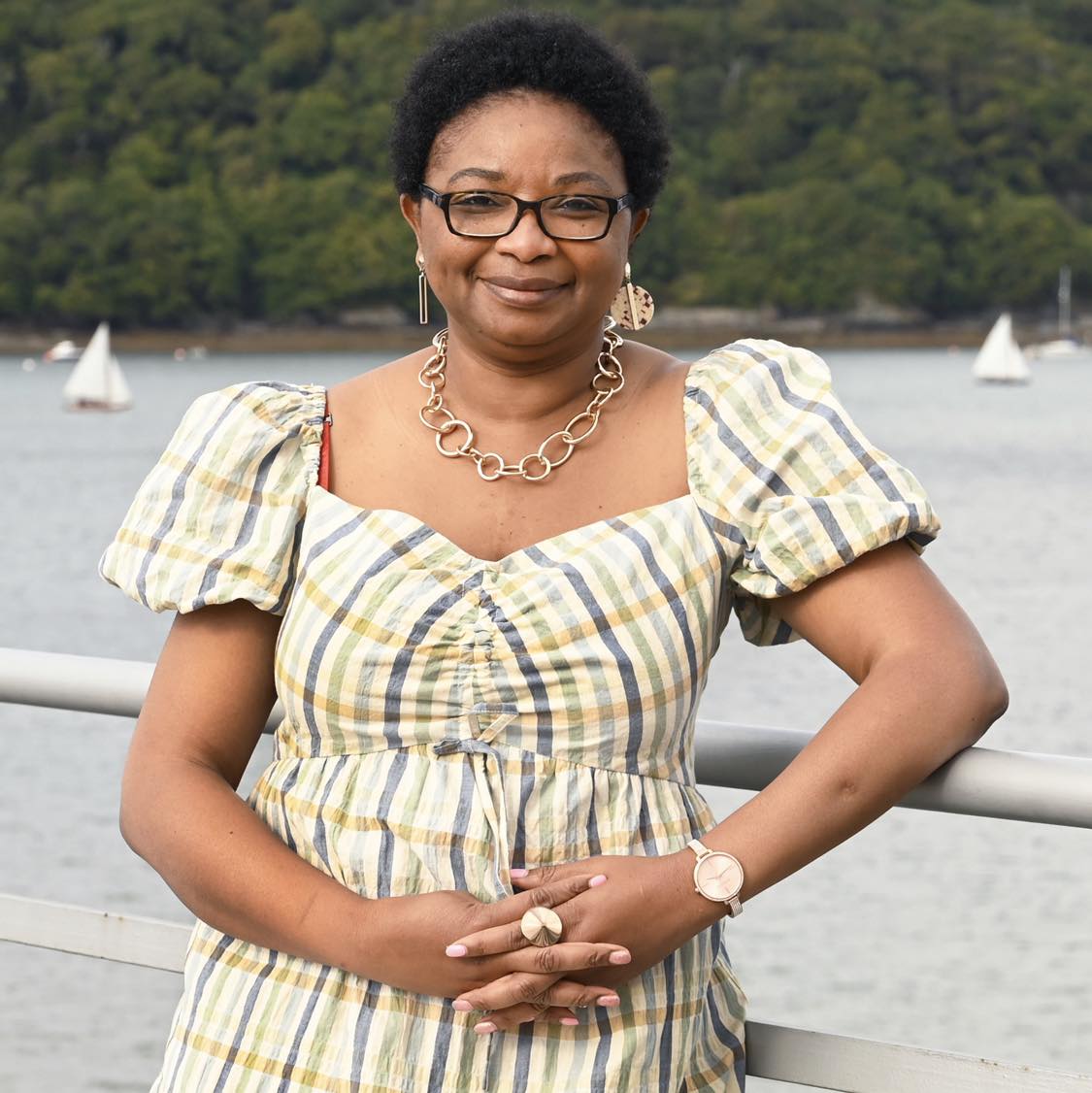
I sometimes describe my life as a conversation between two landscapes: the dry, wide-open country of northern Nigeria where I grew up, and the green, rain-soaked hills of Bangor, north Wales, where I built my second home. In 2023 and 2024, that conversation got louder than ever, and I want to walk you through some of it, not as a list of achievements, but as the story it actually was.
The year opened with genuine excitement. I was on the panel at the grand opening of IUCN’s African Protected Areas Congress, and I remember posting, almost giddy, “Watch the space, Africa is coming!” I meant it. There is a wave of African-led conservation work that the world is only beginning to notice, and I felt lucky to be one voice in that panel discussion.
Closer to home in Bangor and Gwynedd, I was just as happy rolling up my sleeves for the Great Big Green Week, organizing local activities and getting neighbors involved in small, practical climate action. That is the part of this work people rarely see: not conferences, but flyers on noticeboards and people showing up because a neighbor asked them to. Around the same time, the collaborative Africa–Wales climate change work I have been part of for over a decade was captured and shared publicly, alongside Bangor University and the University of Jos, on the theme of how climate change on game reserves affects the people who live alongside them. 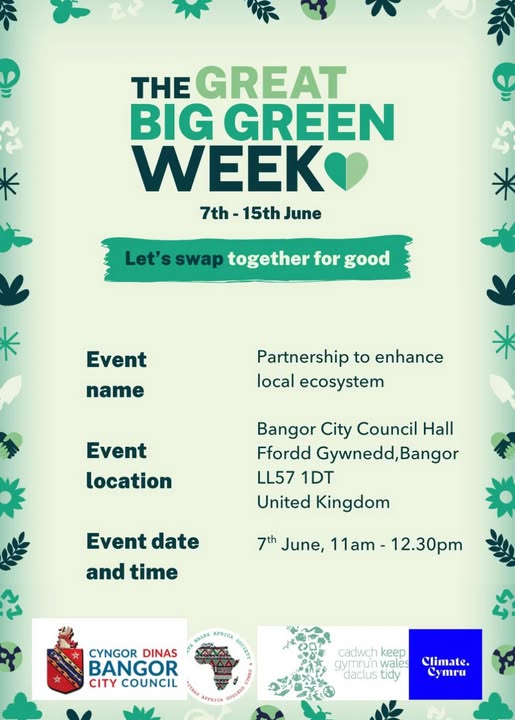
Being counted, and planting a tree
Early in 2023 I found out I had been named on the Future Generations Changemakers 100 list, on page 12, number 45, to be exact, because I checked more than once. It is one thing to do the work quietly for years; it is another to be told publicly that it mattered. Even more moving was learning that a tree had been planted in my name as part of the “100 trees for 100 changemakers” initiative with The Carbon Community. I still smile thinking about it, one small tree, standing in for years of unglamorous fieldwork.
That same spring, I co-hosted an International Women’s Day round table, where we celebrated Caroline, Nigeria’s first female Conservator of Park, and the wider community of women working in conservation across Nigeria. Later that year I was honored with an Ethnic Minority Welsh Women Achievement Association (EMWWAA) award at a joyful evening in Cardiff City Hall, and I continue to serve as a Rhodri Morgan EMWWAA Ambassador, a role I take seriously because representation opened doors for me and I want to keep them open for others.
An honorary doctorate, and a homecoming
If I had to pick one moment from these two years, it would be receiving an Honorary Doctor of Science from my alma mater, Bangor University, in recognition of my contribution to conservation, education, and civic life. I was invited to speak at one of the graduation ceremonies and standing at that podium with my family and mentors in the room, Prof Andrew Pullin, Prof Anthony Nyong, colleagues from Bangor City Council, and three out of my four children among them, was, in the truest sense, a once-in-a-lifetime occasion. I have never forgotten to thank the University of Jos in the same breath as Bangor, because both institutions made me who I am.
That recognition did not stay within Bangor’s walls alone. Back home, the University of Jos Vice Chancellor’s Workers’ Day message on 1st May 2024 singled out my Honorary Doctorate Degree in Public Distinction from Bangor University for commendation, a nod to the Department of Geography that raised me academically. It was a full-circle moment, being celebrated by the institution that first taught me how to ask the right questions, for an honour earned at the one that let me keep asking them.
“It is an honour once again for my work to be showcased. This is ten years plus worth of work, expertly captured.”
From Rome to Yankari
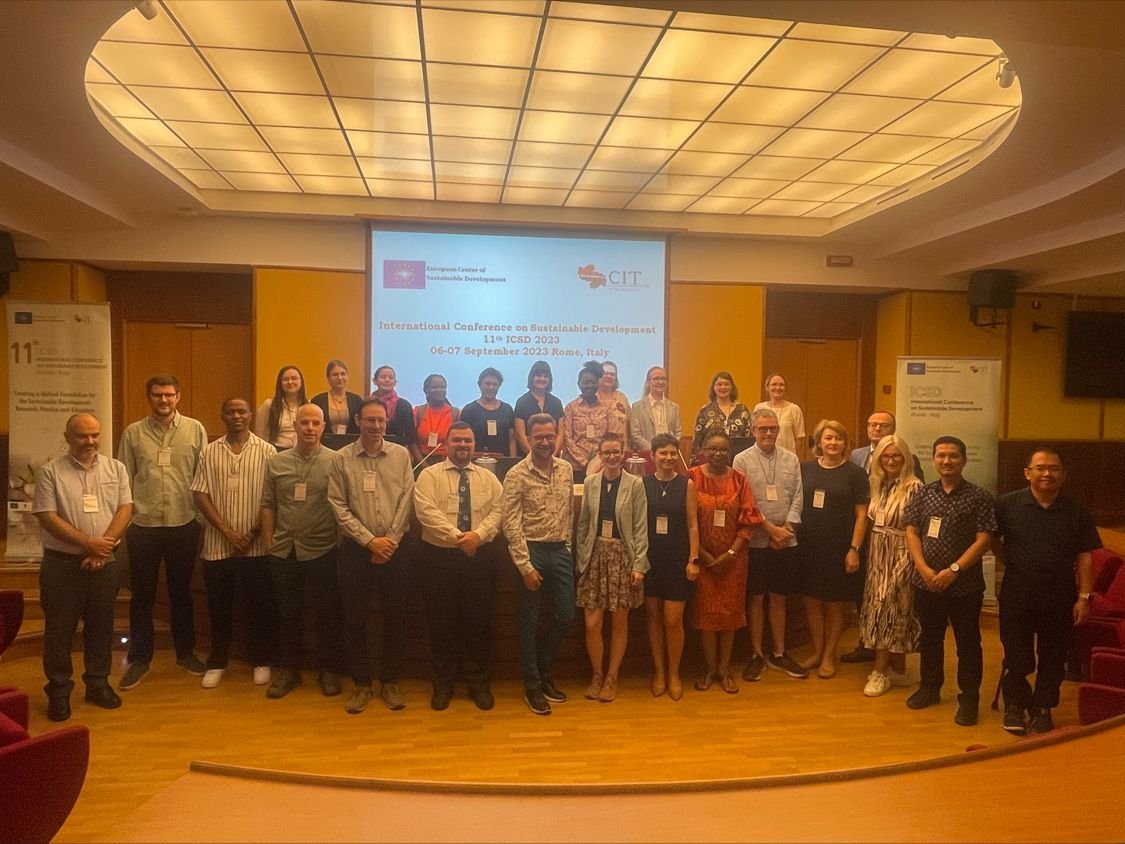

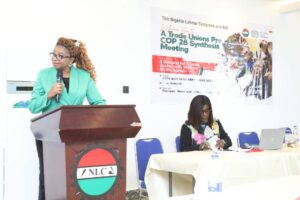
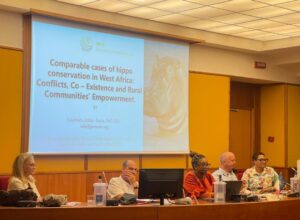
That autumn I travelled to Rome, Italy, to join the 11th European International Conference on Sustainable Development, sitting alongside researchers from the USA, Canada, Europe, Africa and Asia under the theme of building a unified foundation for sustainable development. Not long after, I was back in the field in Nigeria with the Coalition for Conservation Biologists in Nigeria (CBCN), continuing our “Save Nigeria’s Elephants” project with partners including GEF-SGP Nigeria, the Elephant Protection Initiative and the National Park Service, tracking progress in Yankari. I also had the joy of launching our very first public seminar for the Anthony Nyong Climate Centre of Excellence in Jos, on the theme “Climate, Humans and Environment: A Complex Relationship”, which is really the question underneath almost everything I do.
Planting, teaching, and speaking up
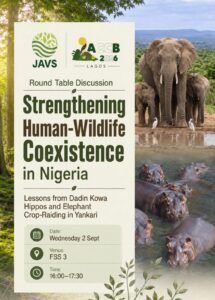
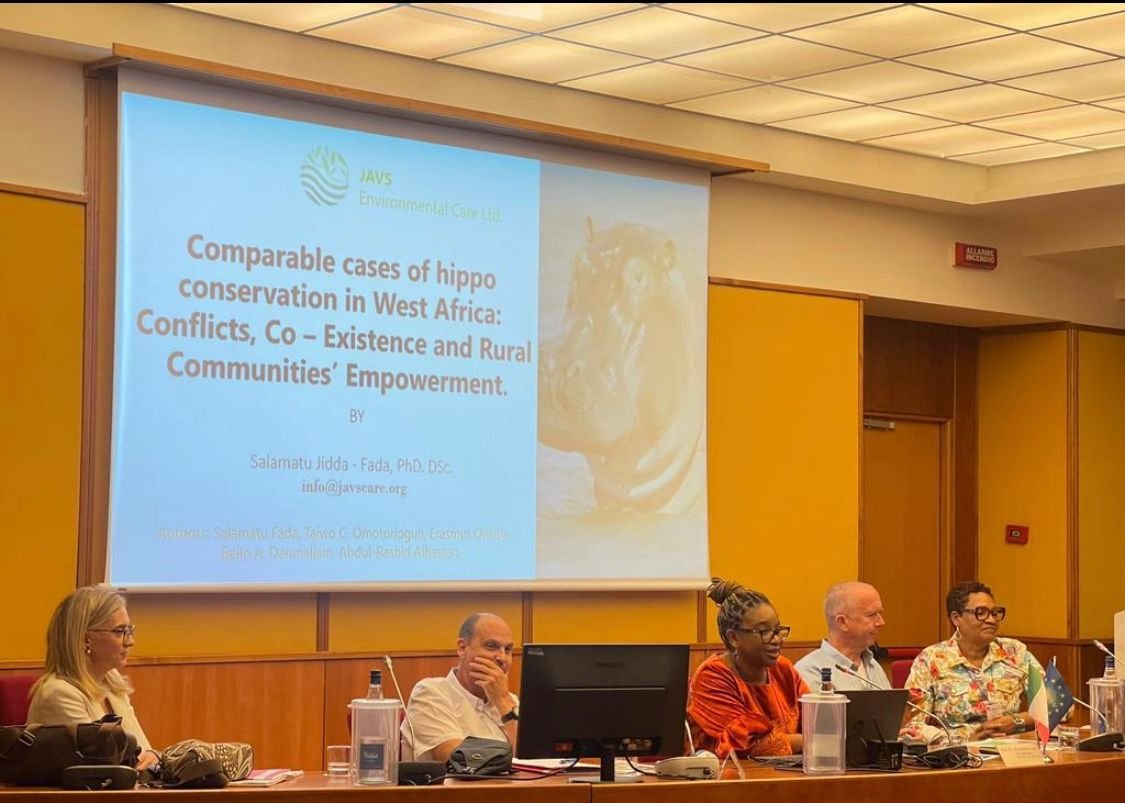
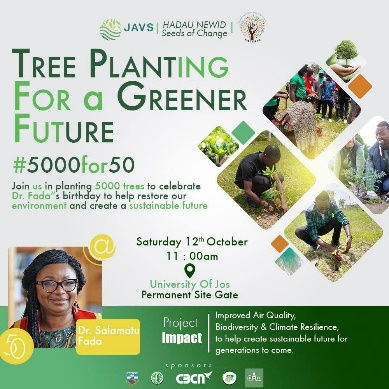
Not everything that year was a stage and a podium. In February 2024, I hosted a quieter webinar, “Our Conservation work in Nigeria: Hippos, Elephants and the People,” because I wanted a space where the people doing the unglamorous, unfunded work of coexistence could simply be heard. Later that year I carried the same message further afield to Moshi, Tanzania, where I delivered a keynote presentation at the Africa Congress for Conservation Biology, hosted at the College of African Wildlife Management, standing among colleagues who understood exactly why this work matters without my needing to explain it twice. In September, Bangor University asked me back as a Distinguished Alumni speaker, and I delivered a lecture titled “Learning to Contribute to Society: Insights from Wales and Nigeria,” trying to make sense, out loud, of how culture and circumstance shape the way communities on two very different continents give back. And because some things deserve marking with your hands and not just your words, that October I turned a birthday into an act of hope, planting 5,000 trees at the University of Jos Permanent Site Campus, one small forest standing in for however many years I have left to keep doing this work.
I ended this period doing something I had never done before, sitting down for a long-form podcast conversation with Glenn Edwards for the Sub-Sahara Advisory Panel and Africa Welsh News. We talked about my upbringing in northern Nigeria, how I found my way to a PhD at Bangor University, how my family and I adjusted to Welsh weather and Welsh people, and the volunteering work that has anchored me on both continents through the North Wales Africa Society, Climate Cymru, JAVS Environmental Care Ltd, and Tallafi UK. It was strange to hear my own story told back to me in an interview, but it reminded me that behind every conference badge is just a person trying to find her footing between two homes.
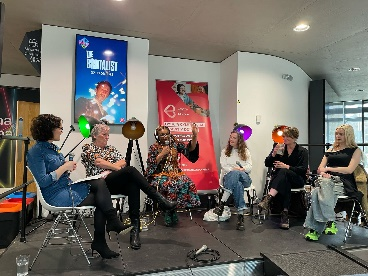
Glenn Edwards speaks with Salamatu Jidda-Fada, PhD. DSc. from the North Wales Africa Society. Part 1
Glenn Edwards speaks with Salamatu Jidda-Fada, PhD. DSc. from the North Wales Africa Society. Part 2